
 English
 French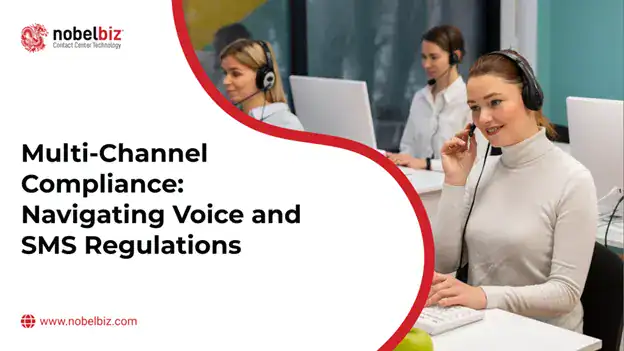
In 2025, contact centers face growing compliance challenges as they engage leads across multiple channels—voice, SMS, and email. From TCPA restrictions on outbound calls to CTIA and CAN-SPAM rules for texting and email, compliance isn’t optional. For lead generation operations, it’s the foundation for sustainable performance, brand trust, and legal protection.
- Multi-channel compliance protects performance: Call center compliance is essential to safeguard revenue, reputation, and operational stability.
- Regulatory violations are costly: Non-compliance with TCPA, CTIA, and CAN-SPAM can lead to heavy fines and carrier-level disruptions.
- Unified systems ensure consistency: Voice, SMS, and email compliance in one system keeps consent tracking and data protection aligned.
- AI monitoring prevents violations: Intelligent tools help detect and stop compliance issues before they escalate.
- Compliance-first practices build trust: Training, documentation, and audits strengthen credibility and accountability in lead generation.
- Future-ready call centers treat compliance strategically: Compliance is viewed as an advantage, not just a legal necessity.
Have you ever considered how much a single compliance misstep could cost your contact center?
Even experienced teams can miss a detail. A phone number gets dialed without proper consent.
A marketing email is sent without an opt-out link. A text message goes out from an unverified number. These minor oversights can lead to significant consequences.
In 2025, contact centers operate under some of the most tightly regulated communication rules to date. Every call, text, or email is governed by compliance frameworks like TCPA, CTIA, and CAN-SPAM, and the stakes are high.
According to the FCC, TCPA violations cost U.S. businesses over $200 million annually. Carriers are now filtering out more than 30% of unverified SMS traffic. Email deliverability is dropping as spam complaints and blacklisting continue to rise.
For contact centers managing high volumes of outreach, compliance is no longer just a legal formality. It’s part of the day-to-day operations and demands constant attention.
In this blog, we’ll walk you through how multi-channel compliance shapes the modern contact centers, covering essential regulations, challenges, and practical strategies to ensure your outreach stays compliant, consistent, and customer-friendly across every channel.
“Your caller ID reputation is now a sales asset. If you’re showing up as ‘Spam Likely,’ your agents are already starting every conversation at a disadvantage.”– Christian Montes, Chief Operating Officer at NobelBiz

The Hidden Compliance Challenges Slowing Down Call Center Performance
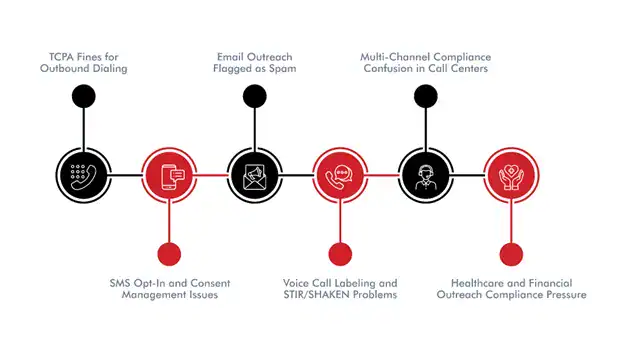
If your team handles calls, texts, or emails, you already know how tricky compliance can be. In 2025, staying compliant means walking a fine line between maintaining outreach volume and meeting every legal requirement.
And even one overlooked rule can slow your performance, hurt your reputation, and strain client relationships. Here are some of the compliance challenges your team might be facing every day:
1. TCPA Fines for Outbound Dialing
If your team runs large outbound calling campaigns, you’ve probably felt the pressure of TCPA compliance. One wrong call, especially from an automated or predictive dialer, without the proper consent, could cost you $500 to $1,500 per call.
It doesn’t take much to get into trouble. Even calling a reassigned number by mistake can lead to serious legal issues. That’s why it’s so important to keep your consent records clean, verify call details, and make sure your agents are properly trained.
2. SMS Opt-In and Consent Management Issues
Ever had a campaign paused because your texts stopped going through? Many call centers still struggle with managing SMS opt-ins and consent, especially when juggling campaigns for different clients.
It’s easy to overlook something small, like missing a STOP or HELP keyword, or forgetting to include clear opt-in language. But these simple misses can lead to blocked numbers, filtered messages, or even carrier warnings.
3. Email Outreach Flagged as Spam
Email is still one of the most effective ways to reach people, but it only works if your messages actually land in the inbox. If your emails get flagged as spam, it hurts your deliverability and damages your reputation.
Things like missing unsubscribe links or unclear sender info can quickly lead to trouble. You might end up blacklisted or even fined under CAN-SPAM rules.
To avoid that, focus on the basics: keep your contact lists clean, be upfront about who you are, and make it easy for people to opt out. A little clarity goes a long way in keeping your emails compliant and seen.
4. Voice Call Labeling and STIR/SHAKEN Problems
Ever seen your number show up as “Spam Likely”, even when you’re following all the rules? That’s not a compliance issue; it’s a trust problem between carriers and your caller ID.
Even fully compliant calls can get ignored if they look suspicious. For contact centers, that means fewer pickups, lost opportunities, and frustrated agents.
To fix it, make sure your numbers are verified, check your trust scores often, and work with STIR/SHAKEN-enabled carriers. That way, your calls look legitimate and your customers are more likely to answer.
5. Multi-Channel Compliance Confusion in Call Centers
Managing calls, texts, and emails under different rules can get confusing when teams use separate tools or follow different processes. When there’s no shared system, essential details often get missed.
Without a unified approach, you risk handling consent inconsistently across channels, which can lead to mistakes and legal trouble. A centralized system helps keep everything aligned, from policies to tracking and reporting, so your outreach stays consistent and safe.
6. Healthcare and Financial Outreach Compliance Pressure
If you work with clients in healthcare or finance, the rules are even tighter. In healthcare, sending patient info over text or mishandling it on a call could lead to HIPAA violations. In finance, unverified emails or data leaks can break GLBA and other consumer protection laws.
These industries expect high standards, secure systems, verified communication, and regular audits. If your call center serves these sectors, you need extra care when handling texts and emails. It is about staying compliant, protecting sensitive data, and keeping client trust.
Fundamental Regulations Shaping Call Center Multi-Channel Compliance
The table below highlights the regulations for each channel and shows how they can impact your daily operations if you’re managing voice, SMS, or email outreach in your contact center.
| Regulation | Channel | Core Rule | Impact on Call Centers |
|---|---|---|---|
| TCPA | Voice/SMS | Consent required for outbound calls & texts | Affects dialing strategy, caller ID management |
| CTIA | SMS | Double opt-in, STOP to unsubscribe | Impacts SMS marketing and carrier filtering |
| CAN-SPA | Clear opt-out, no deceptive subject lines | Impacts outbound email campaigns | |
| GDPR | Email/SMS | Explicit consent & data protection | Impacts EU-based or international outreach |
| HIPAA | Voice/Email/SMS | Protection of health-related data | Essential for healthcare call centers |
Salman Aslam
Director Support – Quality & Training at WORK Inc.
‘The support team at Nobelbiz understood our business requirements and we we’re able to push through seamlessly’
Voice Compliance: TCPA, STIR/SHAKEN, and Caller Reputation
Voice is still one of the most effective ways to connect with leads. But it also comes with strict rules. To keep contact rates high and protect your brand’s reputation, you need to follow both federal regulations and carrier requirements.
What TCPA Means for Outbound and Predictive Dialing: The Telephone Consumer Protection Act (TCPA) governs how and when call centers can contact prospects using automated or predictive dialing systems.
- Violations can lead to fines between $500–$1,500 per call (FCC). At scale, this can easily reach millions in penalties.
- Predictive dialers and prerecorded messages often fall under TCPA restrictions if calls are made without prior express consent.
- Call centers using legacy dialers or insufficient consent-tracking tools risk productivity losses due to system shutdowns or litigation holds.
If you’re running outbound calls, don’t rely on checklists to stay TCPA-compliant; your dialing system should handle it for you. When compliance is built into your technology, your team can stay productive without worrying about crossing legal lines. It’s smarter, faster, and safer.
How to Manage Consent and Maintain Audit-Ready Records
Consent is the foundation of compliant outreach. Every opt-in, timestamp, and contact preference must be documented and easily retrievable.
- Modern call centers must link consent data directly to their CRM and dialer systems.
- Regulators can request documentation at any time; inability to produce it can be treated as non-compliance.
- When a contact opts out—by call, text, or email—that action must automatically apply across all channels.
Call centers should prioritize systems that automatically log and synchronize consent records across their technology stack.
How Do Call Labeling, STIR/SHAKEN, and Carrier Trust Impact Connect Rate?
Even when campaigns are fully compliant, call delivery can fail if carriers or devices flag calls as “Spam Likely.” This directly affects connect rates and agent efficiency.
- STIR/SHAKEN framework: Validates that calls are genuinely from the stated number, reducing spoofing and restoring carrier trust.
- Phone reputation management: Poor number hygiene (reused or flagged numbers) can lead to call blocking or low answer rates—even with legitimate campaigns.
- Call Labeling management: Regularly rotating, registering, and monitoring outbound numbers ensures visibility and reduces the risk of mislabeling.
Call centers should monitor caller reputation as closely as they track conversion rates. A verified, trusted call is far more likely to connect and convert.
How NobelBiz’s Omni+ and Voice Carrier Network Ensure Visibility and Compliance
Managing compliance manually across carriers and dialers is nearly impossible at scale. NobelBiz’s integrated solutions are designed to simplify this challenge for call centers.
- Omni+ platform: Centralizes all outreach activities—voice, SMS, and digital—under a unified, compliance-ready system. It automatically aligns dialing behavior with TCPA and STIR/SHAKEN standards.
- Voice Carrier Network: Provides dedicated, reputation-managed voice routes that reduce spam labeling and ensure consistent call delivery across regions.
- Visibility advantage: Real-time analytics and call verification tools enable call centers to monitor performance, trust scores, and carrier responses in one place.
For call centers balancing high outbound volume with regulatory risk, NobelBiz’s ecosystem delivers what’s most essential: visibility, verification, and peace of mind in every call.
Brayan Carpio
Senior Call Center Manager, Call4You Marketing
‘The technology aspect of NobelBiz stood out compared to the competition, and also the great team! All the way from onboarding to support to troubleshooting has been great throughout this journey!’
SMS Compliance: TCPA & CTIA Rules in 2025
Text messaging is one of the fastest ways to reach leads, but it comes with strict rules. If you send messages without proper consent, you risk fines, carrier blocks, or getting your number flagged. That’s why it’s essential to understand how SMS regulations work. TCPA and CTIA rules might sound similar, but they cover different things, and both matter.
The Difference Between TCPA and CTIA for Call Centers
Many call center leaders mistakenly treat TCPA and CTIA as interchangeable. They’re not. Understanding and following CTIA SMS lead generation rules ensures that call centers maintain both carrier trust and message deliverability across large-scale outreach campaigns.
- TCPA (Telephone Consumer Protection Act): Federal law enforced by the FCC. It regulates consent and restricts automated SMS messages without prior express written permission. Violations can cost $500–$1,500 per text.
- CTIA (Cellular Telecommunications Industry Association): A carrier-driven set of industry guidelines. CTIA compliance affects whether messages are delivered or blocked by carriers.
- Operational reality: Even if your SMS campaign meets TCPA consent requirements, noncompliance with CTIA requirements (e.g., missing required keywords) can still trigger carrier-level filtering.
TCPA keeps you compliant with the law; CTIA keeps your messages deliverable. Call centers need to ensure sustainable SMS operations.
Double Opt-In Requirements and Keyword Response Protocols
Consent verification is no longer optional; it’s expected. The CTIA now emphasizes double opt-in confirmation for most lead-gen texting programs.
After a user submits their phone number, they must confirm consent by replying to a confirmation message. CTIA requires that all messages support STOP and HELP commands and that users are clearly informed about message frequency, fees, and opt-out options. Each opt-in and confirmation should be time-stamped and stored for auditing.
Using double opt-in for your call center's campaigns is a smart move. It gives you clear, defensible proof of consent and helps prevent your numbers from being blocked or marked as spam.
Avoiding Carrier Filtering, Number Suspension, and Deliverability Loss
Even with proper consent, poor SMS practices can still lead to filtering or suspension. Carriers actively scan for patterns that suggest spam or non-compliance.
- Sending identical bulk messages from a single number.
- Exceeding carrier throughput limits.
- Failing to identify the sender or include opt-out instructions.
- Using shared or unregistered 10DLC numbers for promotional campaigns.
If you’re running a high-volume call center, losing a messaging route, even for a short time, can throw off several client campaigns at once. That’s why deliverability isn’t just a tech issue; it’s a core part of staying compliant. Registering your numbers, reviewing message content, and keeping an eye on throughput should be part of your routine.
Verify every outbound call and maintain customer trust with authenticated caller IDs. Protect your caller identity with NobelBiz STIR/SHAKEN-compliant solutions.
How Contact Centers Can Automate SMS Consent Tracking and Audits
Manual tracking of SMS consent is no longer practical for large-scale operations. Automation ensures accuracy, consistency, and audit readiness.
Make sure your dialer, CRM, and SMS tools all talk to each other. When systems are synced, every opt-in, opt-out, and keyword reply is automatically logged, with a precise timestamp. That way, you always know where consent came from and can pull up a complete message history when needed.
With automation in place, SMS compliance becomes easier to manage and poses less risk. It gives your team the confidence to scale outreach while staying in line with legal and carrier requirements.
“Compliance isn’t red tape — it’s revenue protection. The moment you lose trust in voice, SMS, or email, you start losing conversions.” – Christian Montes, Chief Operating Officer at NobelBiz
Email Compliance: CAN-SPAM, GDPR, and Beyond
Email is still one of the most affordable ways to generate leads. But it comes with rules you can’t ignore. If you're sending large volumes of B2B or B2C emails, even one mistake, like missing an unsubscribe link, can lead to hefty fines or hurt your sender reputation. Staying compliant helps keep your emails effective and your domain trusted.
What CAN-SPAM Means for B2B Lead Generation Campaigns
The CAN-SPAM Act governs all commercial email communications in the United States. It applies to both promotional and lead-nurturing campaigns, including those managed by call centers on behalf of clients.
- Clearly identify the sender and purpose of the email.
- Include a physical business address.
- Provide a visible and functional unsubscribe link.
- Honor opt-out requests within 10 business days.
- The FTC can impose fines of up to $50,120 per violation.
- Call centers using automated email tools must ensure compliance templates are embedded within workflows to avoid accidental violations.
For call centers, every email should be built to pass a compliance audit. Integrating CAN-SPAM checks into campaign automation protects both revenue and client relationships.
GDPR and International Outreach: Where Call Centers Fall Under EU Laws
The General Data Protection Regulation (GDPR) extends beyond Europe. Any call center contacting EU residents, whether for sales, support, or lead generation, must comply with its consent and data protection requirements.
- Obtain explicit consent before sending marketing emails.
- Provide a clear explanation of how contact data will be used.
- Allow contacts to withdraw consent at any time.
- Fines can reach €20 million or 4% of global annual revenue, whichever is higher.
Call centers managing international leads must apply GDPR standards globally, not just regionally. A single compliant process for all geographies simplifies operations and reduces legal risk.
How to Avoid Spam Filters Without Breaking Compliance Rules
Many call centers struggle to balance high email deliverability with strict compliance standards. Over-optimizing for inbox placement through aggressive wording, misleading subject lines, or sender manipulation can backfire. Here are best practices for compliant deliverability:
- Maintain clean, verified contact lists; avoid purchased or scraped data.
- Use consistent sender domains that match your organization’s identity.
- Keep message frequency reasonable and relevant to user expectations.
- Avoid deceptive subject lines or “bait” phrasing that could mislead recipients.
For outbound call centers, poor deliverability directly reduces contact rates and campaign ROI. Following clear, consistent compliance practices doesn’t just keep you out of legal trouble—it also improves your sender reputation and builds stronger engagement over time.
Compliance Challenges in Regulated Industries
If your call center works in healthcare, finance, or government, the rules are far more rigid. One small mistake can lead to serious legal trouble and long-term reputation damage. Whether you’re handling calls, emails, or texts, compliance is more than a checkbox—it’s what protects both sensitive data and public trust.
How Healthcare Contact Centers Stay HIPAA-Compliant
Healthcare contact centers routinely handle Protected Health Information (PHI), such as patient records and appointment details. This makes compliance with the Health Insurance Portability and Accountability Act (HIPAA) a non-negotiable operational requirement. Risks include unauthorized access to patient data, exposure of PHI through recorded calls, and the use of unencrypted communication channels.
Here’s how call centers can safeguard sensitive healthcare information and maintain HIPAA compliance:
- Use HIPAA-compliant CRMs and secure VoIP networks.
- Mask or restrict agent access to sensitive fields.
- Encrypt all data in transit and at rest.
- Train agents on PHI handling and breach protocols.
Even an accidental disclosure during a live call can lead to fines or loss of client trust. For healthcare-focused contact centers, HIPAA compliance is an ongoing practice that safeguards both patient privacy and organizational credibility.
Financial Service Lead Generation and Secure Data Handling
Financial service call centers operate under intense regulatory pressure from frameworks such as the Gramm-Leach-Bliley Act (GLBA) and the FTC Safeguards Rule. Every interaction may involve personal financial details, credit data, or loan information that must be protected end-to-end.
Practical steps for secure and compliant financial data handling:
- Implement end-to-end encryption for calls and data transfers.
- Use secure verification methods (e.g., tokenized IDs instead of full SSNs).
- Limit data visibility by agent role and campaign type.
Balancing rapid lead qualification with mandatory verification procedures often slows workflows—but cutting corners increases compliance risk. Financial-sector contact centers should integrate automation tools into their compliance stack so every lead interaction is secure by default, not by exception.
Multi-Channel Compliance in Government and Public Sector Programs
Contact centers supporting government programs handle highly sensitive data, such as benefit applications or public service inquiries. To remain compliant, they must follow strict data protection laws, including the Federal Information Security Modernization Act (FISMA) and applicable State Privacy Acts.
Government compliance requirements for call centers include:
- Maintain strict identity verification during calls or chats.
- Log and archive all interactions for auditing purposes.
- Ensure third-party systems meet federal and state security standards.
Using multiple channels like calls, emails, and texts increases the risk of compliance gaps. Managing all outreach from a unified platform ensures consistent safeguards. For example, a center sending SMS reminders about benefits must follow the same consent and data security protocols as a healthcare center handling patient information.
Technology and Tools for Multi-Channel Compliance
If your call center uses voice, SMS, email, and chat, keeping up with compliance across all of them can be tough. Manual checks don’t scale, especially when call volumes are high or rules keep changing.
That’s where the right tools come in. With the right tech stack, you can build compliance into every message, track it in real time, and stay protected without slowing down.
Compliance Automation and Monitoring Tools for Contact Centers
One of the most significant risks for call centers is relying on manual processes to verify compliance. Missed opt-outs, untracked consent, or outdated scripts can trigger regulatory issues. Automation eliminates these gaps. Essential capabilities of compliance tools include:
- Real-time policy enforcement: Automatically blocks or flags calls and messages that don’t meet consent or regional restrictions.
- Centralized audit trails: Logs every call, SMS, and email interaction with timestamps for full traceability.
- Dynamic consent management: Updates consent status across all connected platforms instantly when a customer opts in or out.
- Script and workflow controls: Ensures agents use approved language and disclosures during live calls.
Compliance automation allows call centers to scale confidently. It reduces human error, accelerates audits, and protects both clients and agents from regulatory exposure.
How AI Detects Risk in Lead Handling Across Channels
Artificial intelligence is increasingly used in contact centers to monitor compliance risks in real time. Modern AI tools for monitoring multi-channel compliance enable call centers to detect violations early and maintain a consistent compliance posture across all communication channels. Applications in call centers include:
- Call monitoring: AI-driven speech analytics can flag non-compliant phrases, missing disclosures, or aggressive sales language.
- Message review: Machine learning models detect unapproved content in SMS or email templates before sending.
- Data handling oversight: AI tools identify patterns of data misuse, such as unauthorized sharing or insecure storage of personal information.
For call centers managing large lead databases and multiple outreach channels, AI serves as an always-on compliance assistant, detecting and correcting risks before they become penalties.
Carrier-Grade Voice and SMS Solutions That Prevent Violations
Even the most compliant outreach strategy can fail if the underlying telecom infrastructure isn’t secure or transparent. Carrier-grade solutions ensure message integrity and prevent accidental violations caused by routing errors or unverified traffic. For call centers, these solutions enable:
- STIR/SHAKEN verification: Validates caller identity, preventing spoofing and improving answer rates.
- Registered 10DLC messaging: Ensures SMS traffic follows carrier-approved routes, reducing spam labeling and filtering.
- Real-time traffic monitoring: Detects unusual call patterns or messaging spikes that may indicate compliance issues.
- Secure voice and text delivery: Protects both agent and customer data during every interaction.
Reliable carrier infrastructure is a compliance safeguard in itself. For call centers, choosing carrier-grade voice and messaging solutions minimizes risk while improving delivery and trust.

Clinical Trial Media
Mo Pene |
Contact Center Technology Manager @ CTM
‘Thanks to NobelBiz, we now enjoy a robust, scalable communication system tailored to our growing needs, empowering us to deliver personalized care experiences more efficiently and boosting our overall revenue.’
Best Practices for Compliance-First Lead Generation
In lead generation, trust matters just as much as volume. One mistake, like missing a consent record or using an unapproved script, can stop your campaigns, lead to fines, and damage client trust. Taking a compliance-first approach helps prevent that. It makes sure every call, text, or email follows the proper rules and keeps your outreach running smoothly.
How to Build a Multi-Channel Compliance Playbook?
Call centers managing multiple outreach channels often face fragmented compliance processes. Each channel has its own regulations, tools, and risk points. A unified compliance playbook brings together contact center communication laws and helps standardize expectations across the entire operation. Essential elements of a strong compliance playbook:
- Document TCPA, CTIA, and CAN-SPAM requirements for voice, SMS, and email outreach in one accessible guide.
- Define how consent is captured, stored, updated, and revoked, ensuring uniform handling across platforms.
- Outline steps for flagging and resolving potential compliance breaches in real time.
- Link playbook policies directly to the CRM, dialer, and communication systems to automatically enforce rules.
A compliance playbook turns complex rules into clear steps your team can follow. For call centers, it helps maintain consistency and reduces the risk of mistakes, especially during high-volume campaigns.
Training Agents and QA Teams on Regulations and Scripts
Even the most sophisticated compliance systems depend on well-trained agents. Every call or message reflects the organization’s understanding of regulations. Without ongoing education, even experienced agents can unintentionally violate guidelines. Training focus areas for call centers:
- Ensure all outbound and inbound conversations include required disclosures and avoid restricted language.
- Teach agents to recognize and properly document changes in verbal and written consent during calls.
- Reinforce secure storage, redaction, and transfer of customer information.
- QA staff should regularly review recordings, flag potential issues, and update scripts as laws evolve.
Compliance training isn’t something you do just once. In a call center, ongoing training helps agents stay sharp, so every call, text, or email follows the rules and reflects your brand accurately.
Regular Audits, Reporting, and Documentation Best Practices
Call centers need to keep accurate records to demonstrate they’re following federal and carrier-specific rules. Even if you’re doing everything right, missing documentation can make it look like you’re not. That’s why tracking every step matters.
Best practices for ongoing compliance validation:
- Review consent logs, opt-out records, and call recordings for accuracy.
- Generate and store activity summaries showing compliance status across voice, SMS, and email channels.
- Keep dated versions of policies, scripts, and disclosures to track historical compliance decisions.
- Periodically engage compliance consultants to validate internal processes and identify risk areas.
Final Thoughts: Compliance Is the Foundation of Lead Trust
For call centers, compliance isn’t a roadblock; it’s the foundation for growth and trust. Every call, text, or email relies on one thing: your audience trusting that their data is safe, their consent matters, and you're playing by the rules.
When compliance is built into your daily operations, it protects more than just your company; it protects the value of every lead you generate.
The top-performing call centers know this. They use innovative tools, train their teams regularly, and stay ahead with ongoing audits.
And the payoff? Better contact rates, stronger reputation, and verified leads that convert.
In a world where the rules are constantly changing, the real winners are those who treat compliance as a strategy, not a checkbox.
Stay Ahead of Compliance Challenges with NobelBiz OMNI+
Compliance violations can halt outbound operations, lower connect rates, and expose call centers to costly fines. With growing oversight across TCPA, CTIA, GDPR, and CCPA maintaining compliant communication across voice, SMS, and email has never been more critical.
NobelBiz OMNI+ helps contact centers simplify compliance management while boosting performance. From advanced dialing modes and built-in consent tracking to real-time compliance filters and STIR/SHAKEN-enabled voice routing, your teams can engage leads confidently, without risking violations.
Ensure your outreach is efficient, transparent, and fully compliant from a single, unified platform.
Frequently Asked Questions
Discover how NobelBiz helps call centers maximize customer engagement, boost answer rates, and ensure compliance with industry-leading solutions.

Michael McGuire is a contact center industry expert with almost two decades of experience in the space. His experience includes roles as Director of Contact Center Digital Transformation at NobelBiz, and as Director of Operations at FLS Connect, managing multiple call centers. As President of Anomaly Squared and Targeted Metrics, Michael successfully transitioned companies into remote operations and significantly boosted revenues. With a strong background in customer service, leadership, strategic planning, and operations management, Michael excels in driving growth and innovation in the call center space.
Mike is also a proud Board Member for R.E.A.C.H Trade Group, promoting consumer protection and satisfaction and Co-host of the Off Skripted Podcast – a show about Life, Call Centers and everything in between.